
Beyond solar: IAS Akash Tripathi on SECI’s vision for India’s clean energy future
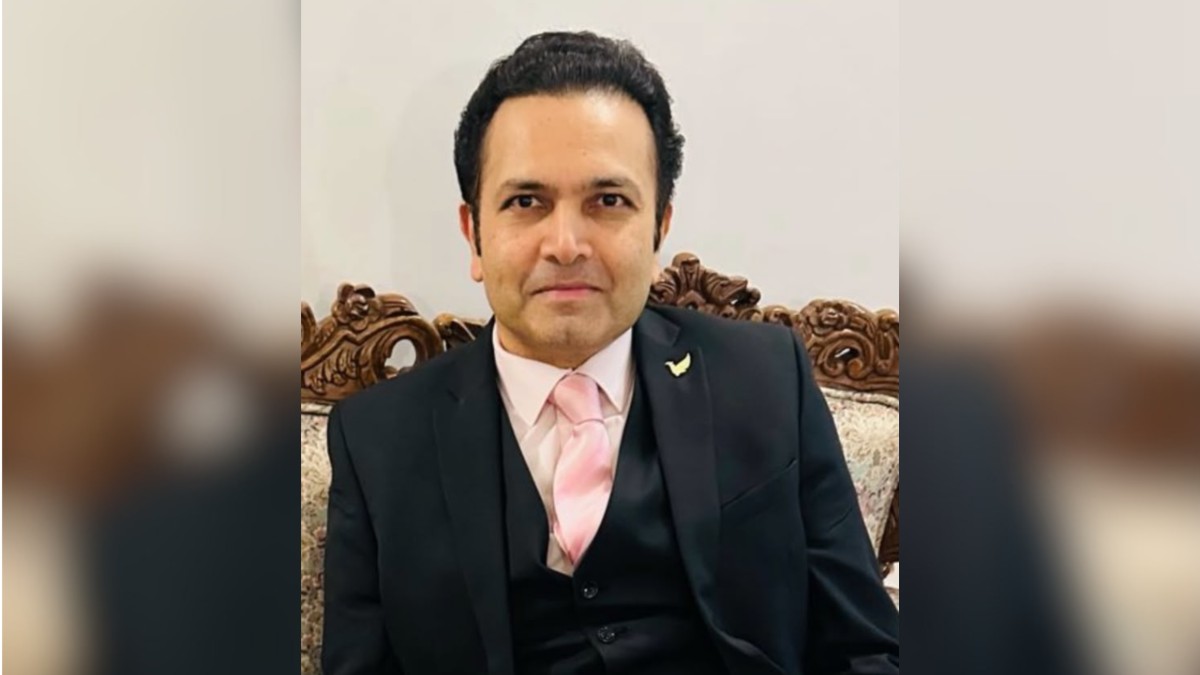
As India moves rapidly towards a cleaner and more energy-secure future, the Solar Energy Corporation of India Limited (SECI) is playing an increasingly important role in shaping the country’s renewable-energy landscape. Over the years, SECI has expanded beyond solar to include wind, hybrid projects, energy storage, firm and dispatchable renewable energy and emerging clean-energy solutions.
In this exclusive interview with Whispers In The Corridors, Akash Tripathi, IAS, Managing Director, SECI, discusses the organisation’s 15-year journey, the next phase of India’s renewable-energy growth, and the growing importance of storage, green hydrogen, domestic manufacturing and innovative procurement models.
Tripathi also shares his vision for SECI by 2030 and beyond, with a focus on reliable clean power, stronger clean-energy markets, industrial participation and India’s journey towards a sustainable and energy-secure Viksit Bharat.
Q: SECI is completing 15 years of its journey. How do you assess the organisation’s contribution to India’s renewable energy transformation, and what are the key milestones that stand out?
A: Fifteen years of SECI reflect the remarkable evolution of Renewable Energy in India. When SECI was established in 2011, its mandate was centered largely around supporting the growth of Solar energy. Today, the organization operates across a wider renewable-energy landscape, covering solar, wind, hybrid projects, storage, firm and dispatchable power, and so on.
I would point to affordability, sustainability, and accessibility as three of SECI's most meaningful contributions to India's renewable energy story. Through transparent competitive bidding, demand aggregation, and long-term power arrangements, SECI has helped bring down the cost of renewable power, made it commercially sustainable at scale, and extended its reach to states across the country that might otherwise have moved more slowly on this transition.
At SECI, this evolution has also been accompanied by continuous innovation in procurement and market design. The organisation has moved from conventional solar and wind procurement towards hybrid, Round-the-Clock, Firm and Dispatchable Renewable Energy, assured peak power and storage-linked procurement. More recently, SECI has also introduced mechanisms such as Contracts for Difference (CfD) and is exploring more market-oriented models that can align renewable power procurement with changing market requirements.
Another important dimension is SECI’s push towards becoming an organization with a wide portfolio of its own RE projects. SECI currently has around 2.275 GW of its own renewable capacity under development. Its projects span strategically across diverse locations, including the 100 MW Floating Solar PV Power Plant at Getalsud Dam, Ranchi, 25 MW Solar PV Power Plant (50 MWp) with 20 MW/50 MWh Battery Energy Storage System at Taru, Leh, Ladakh, 300 MW Solar PV Power Plant at Ramagiri, Andhra Pradesh, which is the largest self-owned project of SECI so far. This gives SECI an opportunity to build operational experience while strengthening its long-term financial and institutional position.
SECI has also expanded into newer areas of the Green Energy ecosystem. The competitive price discovery in the Green Ammonia auctions has received international attention.
Going forward, SECI is also looking beyond the domestic market through technological diversification while expanding its customer base.
Q. As India moves towards ambitious clean-energy targets, what role do you see SECI playing in accelerating the next phase of renewable-energy growth?
A: The nation met the 50 percent non-fossil share of its total installed electricity capacity in June 2025, a full five years ahead of the target year, which is a big achievement for us. India has already crossed 300 GW of installed non-fossil-fuel capacity and is progressing towards the rest of its RE goals. The next phase will therefore require a shift in focus, from capacity creation alone towards the quality, reliability and flexibility of that power.
SECI has an important role in this transition by developing commercial frameworks that respond to how electricity is consumed. The emphasis will increasingly be on solutions that combine different renewable resources and storage, enabling power to be supplied during peak demand rather than only when generation is naturally available. SECI has already been evolving its power supply models in this direction.
Deepening the short-term RE market through innovative contracting models, is also an area that SECI has initiated work in, by bringing Contracts for Difference, in the Indian RE sector for the first time.
The company is also expanding its role across different RE technologies, including through its recent allocation as the National Programme Implementing Agency for the Small Hydro Power Development Scheme.
Our role in the coming years will therefore be to help convert India’s renewable-resource potential into dependable, competitive and system-ready clean power, while supporting the application of clean energy in sectors such as steel, fertilisers and maritime etc, where decarbonisation will require solutions beyond conventional renewable power.
Q. What are SECI’s key priorities and strategic initiatives for the next five to ten years to support India’s transition towards a cleaner and more sustainable energy future?
A:The next five to ten years will be about building greater depth and resilience into India’s clean-energy transition. The evolving geopolitical situation has made RE as a critical pillar for the nation’s energy security as well. So, as renewable capacity scales up, SECI’s priorities will extend beyond conventional renewable power to technologies, applications and procurement models that can meet the changing requirements of the power system and the wider economy.
A key priority will be energy storage. As the share of RE increases, storage will become increasingly important for balancing the grid and making renewable power available when it is needed.
SECI will also support the development of domestic clean-energy manufacturing capabilities, through the PLI Scheme for high-efficiency solar PV modules. Building indigenous manufacturing capacity will strengthen the renewable-energy supply chain and contribute to an Atmanirbhar Bharat.
At the same time, the focus will be on scaling up emerging technologies and new applications, including offshore wind, agri-PV and other innovative renewable-energy solutions. Programmes such as PM-KUSUM can take renewable energy closer to the end user by supporting solarisation of agricultural feeders and decentralised solar pumping, with benefits for reliable daytime power and reduced dependence on conventional fuels.
More broadly, SECI will continue to support the greening of non-electrified and hard-to-abate sectors, where clean energy solutions can contribute to India’s broader energy-security and decarbonisation objectives.
Q. With solar, wind, hybrid and RTC renewable power gaining momentum, how is SECI evolving its bidding and procurement models to meet changing power-sector requirements?
A: SECI has moved decisively beyond vanilla solar and wind tenders. The requirements of the power system today are more sophisticated, and SECI's power supply models have evolved accordingly, from standalone solar and wind to solar-wind hybrid projects, assured peak-power arrangements, Round-the-Clock supply, and Firm and Dispatchable Renewable Energy.
SECI is also bringing market-friendly models, responsive to evolving sectoral requirements, that encompass the energy requirements of larger consumer categories. This reflects a deliberate move away from a one-size-fits-all approach, towards instruments tailored to needs of different consumers.
DISCOMs, industrial consumers, and institutional buyers each have distinct load profiles, risk appetites, and reliability requirements, and SECI's evolving suite of tenders is designed to be flexible enough to meet each of these categories on its own terms. As the RE sector itself becomes more diverse in its demands, this responsiveness is what allows SECI to remain relevant not only to traditional offtakers but to a widening base of consumers with genuinely different requirements.
Q. Energy storage is critical for large-scale renewable integration. What opportunities do you see in battery storage, Green Hydrogen and emerging technologies, and how can SECI build a robust ecosystem around them?
A: Renewable energy (including large hydro) contributed 26.2% of total electricity generation in FY 2025-26. Due to increased share of intermittent energy, it is necessary that the mechanisms for storing and converting energy are adopted at commensurate scale.
Battery Energy Storage is one of the most immediate examples. As renewable penetration increases, storage can help manage variability, meet peak requirements and improve the utilisation of renewable generation. SECI has already taken important steps in establishing large-scale storage procurement and developing commercial models around it.
Green ammonia in particular anchors near-term demand — replacing grey ammonia in fertiliser production domestically and opening export opportunities to markets like the EU, Japan, and South Korea seeking green ammonia for shipping fuel and industrial decarbonization.
SECI's role across all of this is consistent, even as the technologies differ. It is to help move these solutions from demonstration to deployment by creating credible, aggregated demand; by designing transparent procurement mechanisms; and by putting in place long-term market structures that give investors and developers the confidence to build at scale. The technologies themselves are largely proven elsewhere in the world; what India's ecosystem still needs is the market architecture that makes them commercially viable here.
Q. How is SECI attracting private and international investment into India’s renewable-energy sector, and where do you see further opportunities?
A: SECI’s competitive bidding mechanism delivers transparent price discovery, while long-term power purchase and sale arrangements give investors assurance on revenues and offtake, these are what make a project bankable rather than merely promising. Scale, in turn, comes from how SECI aggregates demand across states and DISCOMs, structuring opportunities at a size that draws serious long-term capital in the first place.
International investors are drawn to India for reasons that are increasingly hard to find together in one market: scale, sustained demand growth, and a policy direction that has held itself steady. Domestic capital, meanwhile, is moving well beyond generation alone, into manufacturing and storage.
The objective is to create an investment environment where capital is not only attracted to individual projects, but increasingly to India’s broader clean-energy growth story. SECI is contributing by providing transparent procurement, credible counterparties and commercially structured opportunities.
Q: Domestic manufacturing of solar modules, cells and renewable-energy components is vital for energy security. How can SECI strengthen the clean-energy manufacturing ecosystem?`
A: SECI is contributing primarily by creating visibility on future demand. Large-scale procurement programmes provide manufacturers with a clearer indication of market requirements, allowing them to make long-term decisions on capacity, technology and supply chains.
This creates an important link between deployment and manufacturing. As renewable capacity expands, domestic manufacturing can expand alongside it; and as Indian manufacturing becomes stronger, the country becomes better positioned to support further deployment.
There is also a strategic dimension worth noting: a meaningful share of investment in solar modules, wind components, or electrolysers is de-risking India's energy supply chain from global shocks, whether crude price volatility or disruptions in critical minerals and equipment.
The SIGHT Scheme's manufacturing component, incentivising domestic electrolyser production under the National Green Hydrogen Mission, is a direct example. As SIGHT's implementing agency, SECI is steering this domain also alongside conventional generation and storage.
Q. With renewable energy becoming increasingly important for industries and businesses, how can SECI accelerate green-power adoption across the C&I sector?
A: What C&I buyers need is fundamentally different from what a DISCOM needs, and our offerings must reflect that. A steel plant, a data centre, and an IT park don't consume power the same way, and a one-size-fits-all solar or wind contract will never serve all three well. That's why SECI is finalising a dedicated procurement framework for this segment, built around customised FDRE, hybrid, RTC, instruments designed around how a specific industry draws power, rather than asking industry to adapt to a standard renewable contract.
Instruments like virtual PPAs also matter more here than anywhere else in our portfolio, because they let a company decarbonise its footprint without needing a renewable project physically next door which matters enormously for industries with land-constrained or geographically fixed operations.
If I had to describe the shift in one line: we're moving from selling renewable energy to industry, to designing renewable energy around industry. That's a more demanding role for SECI, but it's also where I think the next real potential of growth in this sector will come from.
Q: As SECI enters its next chapter, what is your vision for the organisation by 2030 and beyond, and how do you see it contributing to a sustainable and energy-secure Viksit Bharat?
A: SECI is already working towards being an integrated clean energy provider with a wide footprint globally and becoming the flagbearer of Renewable Energy.
By 2030 and beyond, I would like SECI to be recognized by the scale of transformation it has enabled—stronger clean-energy markets, greater reliability, deeper industrial participation and stronger capabilities across the value chain. This would include expanding SECI’s international engagement to support India’s clean-energy capabilities and facilitate opportunities beyond domestic markets, while also building a stronger own RE projects base.
SECI must remain responsive to a rapidly changing energy landscape. Technologies will evolve, consumer requirements will change and new forms of energy will emerge.
I also foresee SECI contributing towards technological advancements, creating and expanding RE markets and providing larger access to clean energy across geographies.
A country with abundant, affordable and increasingly indigenous clean energy is better positioned to support industry, create new manufacturing opportunities and reduce exposure to external energy shocks. That is the larger significance of SECI’s work.
A Viksit Bharat must be economically strong, technologically capable and energy secure. SECI is contributing to that vision by helping build the clean-energy foundations on which India’s next phase of growth can rest.


Comments (0)
No comments yet. Be the first.